Top Drywall Contractors in Bethesda
We’ve been providing top-quality drywall service in Bethesda for many years. We’ve been recognized as the top drywall contractor in Bethesda, because of our outstanding work quality and our amazing customer service. Here are a few of the services we offer:
- Drywall Framing
- Drywall Installation
- Drywall Repair
- Drywall Finishing
- Drywall Texturing
- Popcorn Ceiling Removal
- Wallpaper Removal
- Insulation
When you’re ready to start your next drywall project, send us an email or give us a call.
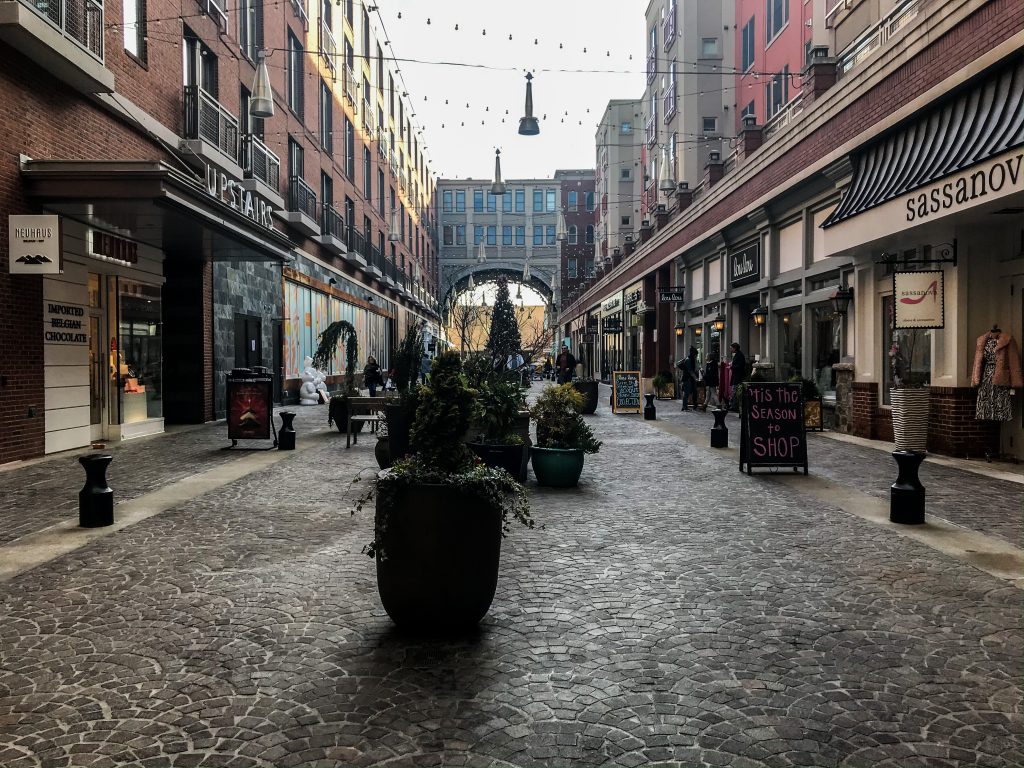
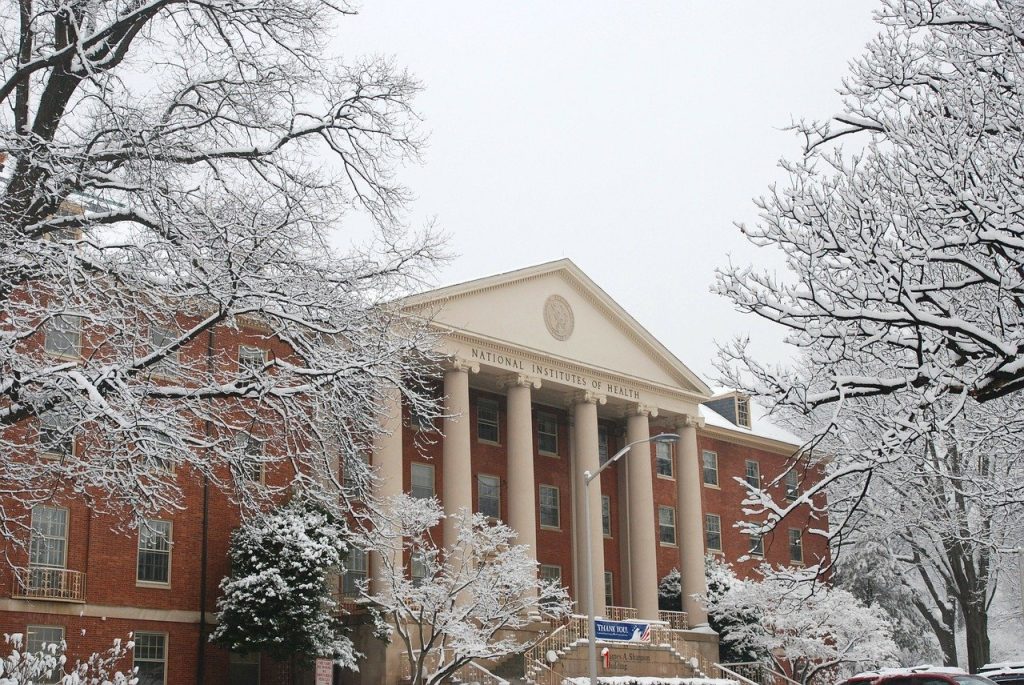
Bethesda is an unincorporated, census-designated place in southern Montgomery County, Maryland, United States, located just northwest of Washington, D.C. It takes its proclaim from a local church, the Bethesda Meeting House (1820, rebuilt 1849), which in position took its declare from Jerusalem’s Pool of Bethesda. The National Institutes of Health’s main campus and the Walter Reed National Military Medical Center are in Bethesda, in supplement to a number of corporate and running headquarters.
As an unincorporated community, Bethesda has no official boundaries. The United States Census Bureau defines a census-designated place named Bethesda whose center is located at 38°59′N 77°7′W / 38.983°N 77.117°W, while the United States Geological Survey has defined Bethesda as an area whose center is at 38°58′50″N 77°6′2″W / 38.98056°N 77.10056°W, slightly substitute from the Census Bureau’s definition. The Bethesda Urban Planning District uses extra definitions, the United States Postal Service (which defines Bethesda to comprise the ZIP Codes 20810, 20811, 20813, 20814, 20815, 20816, and 20817), and further organizations. According to the 2020 United States census, the community had a total population of 68,056.
Bethesda is located in a region that was populated by the Piscataway and Nacotchtank tribes at the era of European colonization. Fur trader Henry Fleet became the first European to visit the area, reaching it by sailing taking place the Potomac River. He stayed subsequent to the Piscataway tribe from 1623 to 1627, either as a guest or prisoner (historical accounts differ). Fleet eventually secured funding for option expedition to the region and was highly developed granted proprietary rights to 2,000 acres of house in the nascent colony and became a enthusiast of Maryland’s colonial legislature. Raids from the Senecas and Susquehannock resulted in the foundation of the Maryland distancing of Rangers in 1694 to patrol the frontier.
Most settlers in colonial Maryland were tenant farmers who paid their rent in tobacco, and colonists continued to proceed farther north in search of fertile land. Henry Darnall (1645–1711) surveyed a 710-acre (290-hectare) area in 1694 which became the first land assent in Bethesda. Tobacco farming was the primary artifice of vibrancy in Bethesda throughout the 1700s. The city avoided seeing performance during the Revolutionary War, although it became a supply region for the fledgling Continental Navy. The inauguration of Washington, D.C. in 1790 deprived Montgomery County of its economic center at Georgetown, although the matter had Tiny effect on the small farmers throughout Bethesda.
Between 1805 and 1821, Bethesda became a rural showing off station after the improvement of the Washington and Rockville Turnpike, which carried tobacco and supplementary products amongst Georgetown and Rockville, and north to Frederick. A small settlement grew on the subject of a collection and tollhouse along the turnpike by 1862 known as “Darcy’s Store”, named after the store’s owner William E. Darcy. The pact was renamed in 1871 by postmaster Robert Franck after the Bethesda Meeting House, a Presbyterian church built in 1820. The church burned in 1849 and was rebuilt the similar year about 100 yards (91 m) south, and its former location became the Cemetery of the Bethesda Meeting House.
Bethesda did not fabricate beyond a little crossroads village through the 19th century. It consisted of a blacksmith shop, a church and school, and a few houses and stores. In 1852, the postmaster general acknowledged a reveal office in Bethesda and appointed Rev. A. R. Smith its first postmaster. A streetcar origin was traditional in 1890 and suburbanization increased in the to come 1900s, and Bethesda grew in population. Communities situated close railroad lines had grown the fastest during the 19th century. Still, mass production of the automobile the end that dependency and Bethesda planners grew the community considering the transportation rebellion in mind. This included becoming a key stopping dwindling for the B & O railroad upon their Georgetown Branch origin completed more or less 1910 that ran from Silver Spring to Georgetown, passing through Bethesda on the way. The branch had a storage yard there and multiple sidings that served the industries in Bethesda in the to the front 20th century. B & O successor CSX ceased train service on the heritage in 1985, so the county transformed it into a trail in the rails-to-trails movement. The tracks were removed in 1994, and the first allocation of the trail was opened in 1998; it has become the most used rail-trail in the United States, averaging exceeding one million users per year.
Subdivisions began to appear on old farmland in the late 19th century, becoming the neighborhoods of Drummond, Woodmont, Edgemoor, and Battery Park. Farther north, several rich men made Rockville Pike well-known for its mansions. These included Brainard W. Parker (“Cedarcroft”, 1892), James Oyster (“Strathmore”, 1899), George E. Hamilton (“Hamilton House”, 1904; now the Stone Ridge School), Luke I. Wilson (“Tree Tops”, 1926), Gilbert Hovey Grosvenor (“Wild Acres”, 1928–29), and George Freeland Peter (“Stone House”, 1930). In 1930, Dr Armistead Peter’s pioneering manor house “Winona” (1873) became the clubhouse of the Woodmont Country Club upon land that is now ration of the National Institutes of Health (NIH) campus. Merle Thorpe’s mansion “Pook’s Hill” (1927, razed 1948) became the home-in-exile of the Norwegian Royal Family during World War II.
World War II and the subsequent enhance of government further fed the rapid growth of Bethesda. Both the National Naval Medical Center (1940–42) and the NIH complex (1948) were built just to the north of the developing downtown, and this drew paperwork contractors, medical professionals, and new businesses to the area. In recent years, Bethesda has become the major urban core and employment middle of southwestern Montgomery County. This recent vigorous accrual has followed the 1984 spread of Metrorail considering a station in Bethesda. Alan Kay built the Bethesda Metro Center higher than the Red parentage metro rail, which opened taking place further public notice and residential progress in the curt vicinity. In the 2000s, the strict top limits upon construction in the District of Columbia led to the move ahead of mid-and high-rise office and residential towers almost the Bethesda Metro stop, effectively creating a major urban center.[citation needed]