Top Drywall Contractors in Alexandria
We’ve been providing top-quality drywall service in Alexandria for many years. We’ve been recognized as the top drywall contractor in Alexandria, because of our outstanding work quality and our amazing customer service. Here are a few of the services we offer:
- Drywall Framing
- Drywall Installation
- Drywall Repair
- Drywall Finishing
- Drywall Texturing
- Popcorn Ceiling Removal
- Wallpaper Removal
- Insulation
When you’re ready to start your next drywall project, send us an email or give us a call.
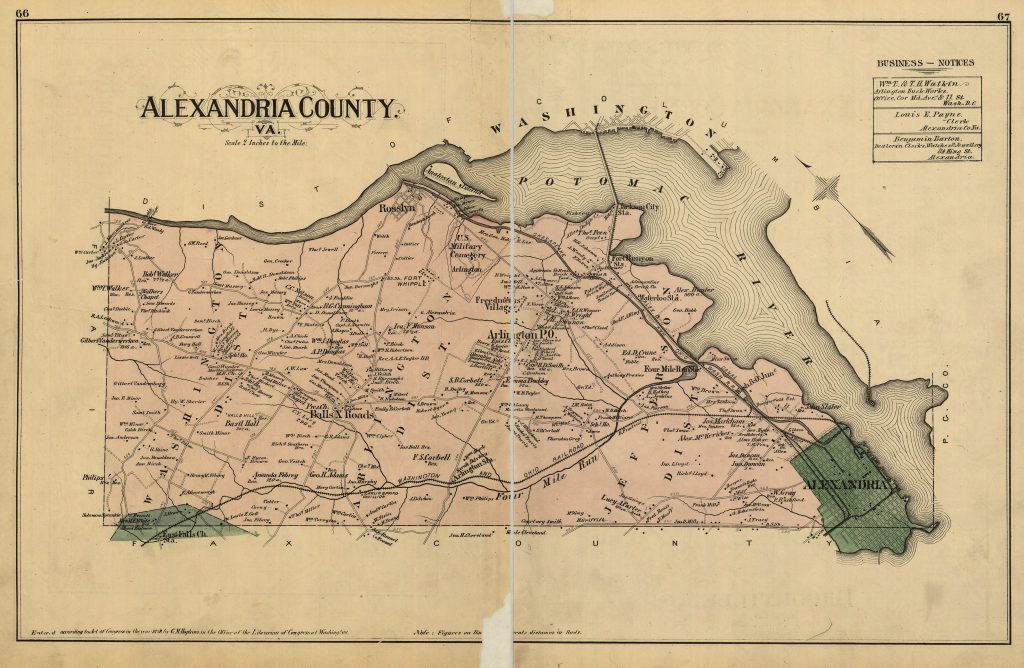
Alexandria is an independent city in the Commonwealth of Virginia in the United States. As of 2020, the population was 159,467. The city’s estimated population has grown by 1% percent annually since 2010 on average. Located along the western bank of the Potomac River, Alexandria is nearly 7 miles (11 km) south of downtown Washington, D.C.
Like the get off of Northern Virginia, as competently as Central Maryland, modern Alexandria has been influenced by its proximity to the U.S. capital. It is largely populated by professionals vigorous in the federal civil service, in the U.S. military, or for one of the many private companies which contract to allow services to the federal government. One of Alexandria’s largest employers is the U.S. Department of Defense. Another is the Institute for Defense Analyses. In 2005, the United States Patent and Trademark Office moved to Alexandria, and in 2017, so did the headquarters of the National Science Foundation.
The historic center of Alexandria is known as Old Town. With its fascination of boutiques, restaurants, antique shops and theaters, it is a major charisma for all who live in Alexandria as without difficulty for visitors. Like Old Town, many Alexandria neighborhoods are compact and walkable. It is the 7th largest and highest-income independent city in Virginia.
A large share of adjacent Fairfax County, mostly south but afterward west of the city, has Alexandria mailing addresses. However, this Place is under the jurisdiction of Fairfax County’s executive and disaffect the independent city. The city is for that reason sometimes referred to as the “City of Alexandria” to avoid confusion (see the “Neighborhoods” paragraph below). Additionally, neighboring Arlington County was formerly named “Alexandria County” before it was renamed by the Virginia General Assembly in 1920 to cut confusion considering the city.
According to archaeologists’ estimates, a appointment of original peoples began to occupy the Chesapeake and Tidewater region about 3,000 to 10,000 years ago. Various Algonquian-speaking peoples inhabited the lands in the Potomac River drainage area since at least the in front 14th century.
In the summer of 1608, English settler John Smith explored the Potomac River and came into door with the Patawomeck (loosely affiliated afterward the Powhatan) and Doeg tribes who lived on the Virginia side, as skillfully as upon Theodore Roosevelt Island, and the Piscataway (also known as the Conoy), who resided on the Maryland side. On this visit, Smith recorded the presence of a concurrence called Assaomeck near the south bank of what is now Hunting Creek.
On October 21, 1669, a patent granted 6,000 acres (24 km2) to Robert Howsing for transporting 120 people to the Colony of Virginia.: 5 That tract would sophisticated become the City of Alexandria.: 5 Virginia’s collection Tobacco Inspection Law of 1730 mandated that all tobacco grown in the colony must be brought to locally designated public warehouses for inspection past sale. One of the sites designated for a warehouse on the upper Potomac River was at the mouth of Hunting Creek. However, the showground proved to be unsuitable, and the warehouse was built half a mile up-river, where the water was deep close the shore.
Following the 1745 deal of the Virginia’s 10-year dispute following Lord Fairfax greater than the western boundary of the Northern Neck Proprietary, when the Privy Council in London found in agreement of Lord Fairfax’s expanded claim, some of the Fairfax County gentry formed the Ohio Company of Virginia. They meant to conduct trade into the interior of America, and they required a trading middle near the head of navigation on the Potomac. The best location was Hunting Creek tobacco warehouse, since the deep water could easily accommodate sailing ships. Many local tobacco planters, however, wanted a other town further up Hunting Creek, away from nonproductive fields along the river.
Around 1746, Captain Philip Alexander II (1704–1753) moved to what is south of gift Duke Street in Alexandria. His estate, which consisted of 500 acres (2.0 km2), was bounded by Hunting Creek, Hooff’s Run, the Potomac River, and approximately the heritage which would become Cameron Street. At the start of Virginia’s 1748–49 legislative session, there was a petition submitted in the House of Burgesses upon November 1, 1748, that the “inhabitants of Fairfax (Co.) praying that a town may be customary at Hunting Creek Warehouse on Potowmack River,” as Hugh West was the owner of the warehouse. The petition was introduced by Lawrence Washington (1718–1752), the representative for Fairfax County and, more importantly, the son-in-law of William Fairfax and a founding believer of the Ohio Company. To retain the company’s push for a town upon the river, Lawrence’s younger brother George Washington, an aspiring surveyor, made a sketch of the shoreline touting the advantages of the tobacco warehouse site.
Since the river site was amidst his estate, Philip opposed the idea and strongly favored a site at the head of Hunting Creek (also known as Great Hunting Creek). It has been said that in order to avoid a predicament the petitioners offered to publicize the extra town Alexandria, in tribute of Philip’s family. As a result, Philip and his cousin Captain John Alexander (1711–1763) gave house to support in the spread of Alexandria, and are thus listed as the founders. This John was the son of Robert Alexander II (1688–1735). On May 2, 1749, the House of Burgesses recognized the river location and ordered “Mr. Washington reach go going on with a Message to the Council and acquaint them that this House have no question to the Amendments titled An Act for erecting a Town at Hunting Creek Warehouse, in the County of Fairfax.” A “Public Vendue” (auction) was advertised for July, and the county surveyor laid out street lanes and town lots. The auction was conducted on July 13–14, 1749.
Almost immediately upon establishment, the town founders called the new town “Belhaven”, believed to be in rave review of a Scottish patriot, John Hamilton, 2nd Lord Belhaven and Stenton, the Northern Neck tobacco trade being subsequently dominated by Scots. The declare Belhaven was used in approved lotteries to lift money for a Church and Market House, but it was never endorsed by the legislature and fell out of favor in the mid-1750s. The town of Alexandria did not become incorporated until 1779.
In 1755, General Edward Braddock organized his fatal expedition next to Fort Duquesne at Carlyle House in Alexandria. In April 1755, the governors of Virginia, and the provinces of Maryland, Pennsylvania, Massachusetts, and New York met to determine upon concerted action next to the French in America.
In March 1785, commissioners from Virginia and Maryland met in Alexandria to discuss the want ad relations of the two states, finishing their concern at Mount Vernon. The Mount Vernon Conference concluded upon March 28 later an taking office for liberty of trade and liberty of navigation of the Potomac River. The Maryland legislature, in ratifying this agreement on November 22, proposed a conference along with representatives from whatever the states to rule the adoption of final commercial regulations. This led to the calling of the Annapolis Convention of 1786, which in tilt led to the calling of the Federal Convention of 1787.
In 1791, Alexandria was included in the area chosen by George Washington to become the District of Columbia.
In 1814, during the War of 1812, a British fleet launched a booming Raid on Alexandria, which surrendered without a fight. As totally in the terms of surrender the British looted stores and warehouses of mainly flour, tobacco, cotton, wine, and sugar. In 1823 William Holland Wilmer, Francis Scott Key, and others founded the Virginia Theological Seminary. From 1828 to 1836, Alexandria was home to the Franklin & Armfield Slave Market, one of the largest slave trading companies in the country. By the 1830s, they were sending on top of 1,000 slaves annually from Alexandria to their Natchez, Mississippi, New Orleans, and vanguard Texas markets to help meet the request for slaves in Mississippi and friendly states. Later owned by Price, Birch & Co., the slave pen became a jail below Union occupation.
A ration of the City of Alexandria—most of the area now known as “Old Town” as well as the areas of the city northeast of what is now King Street—and everything of today’s Arlington County share the distinction of having been the share of Virginia ceded to the U.S. Government in 1791 to incite form the new District of Columbia. Over time, a interest grew to cut off what was called “Alexandria County” from the District of Columbia. As competition grew behind the port of Georgetown and the Chesapeake and Ohio Canal fostered development upon the north side of the Potomac River, Alexandria’s economy stagnated; at the similar time, residents had at a loose end any representation in Congress and the right to vote, and were disappointed later the negligible economic benefit (on the Alexandria side) of being allowance of the national capital. Alexandria nevertheless had an important harbor and shout from the rooftops in the slave trade, and as chat increased of abolishing slavery in the national capital, there was concern that Alexandria’s economy would be anxious greatly if this step were taken. After a referendum, voters petitioned Congress and Virginia to recompense the portion of the District of Columbia south of the Potomac River (Alexandria County) to Virginia. On July 9, 1846, Congress retroceded Alexandria County to Virginia. The City of Alexandria was re-chartered in 1852 and became independent of Alexandria County in 1870. The long-lasting portion of Alexandria County changed its pronounce to Arlington County in 1920.
The first fatalities of the North and South in the American Civil War occurred in Alexandria. Within a month of the Battle of Fort Sumter, Union troops occupied Alexandria, landing troops at the base of King Street on the Potomac River upon May 24, 1861. A few blocks occurring King Street from their landing site, the commander of the New York Fire Zouaves, Colonel Elmer E. Ellsworth, sortied next a little detachment to sever a large Confederate flag displayed upon the roof of the Marshall House Inn that had been visible from the White House. While descending from the roof, Ellsworth was shot dead by James W. Jackson, the hotel’s proprietor. One of Ellsworth’s soldiers tersely killed Jackson. Ellsworth was publicized as a Union martyr, and the incident generated good excitement in the North, with many kids being named for him. Jackson’s death defending his home caused a thesame sensation in the South.
Alexandria remained below military motion until the subside of the war. Fort Ward, one of a sports ground of forts built by the Union army for the explanation of Washington, D.C., is located inside the boundaries of present-day Alexandria. After the inauguration by Washington of the welcome of West Virginia in 1863 and until the close of the war, Alexandria was the chair of the so-called Restored Government of Virginia, also known as the “Alexandria Government”. During the Union occupation, a recurring contention in the midst of the Alexandria citizenry and the military occupiers was the Union army’s periodic insistence that church services add up prayers for the President of the United States. Failure to do hence resulted in incidents including the arrest of ministers in their church.
In 1861 and 1862, escaped African-American slaves poured into Alexandria. Safely astern Union lines, the cities of Alexandria and Washington offered comparative release and employment. Alexandria became a major supply depot and transport and hospital center for the Union army. Until the Emancipation Proclamation of January 1, 1863, escaped slaves legally remained the property of their owners. Therefore, they were labeled contrabands to avoid returning them to their masters. Contrabands worked for the Union army in various retain roles.
After everything slaves in the seceding states were liberated, even more African Americans came to Alexandria. By the slip of 1863, the population of Alexandria had exploded to 18,000—an enlargement of 10,000 people in 16 months.
As of ratification of the Fifteenth Amendment, Alexandria County’s black population was beyond 8,700, or very nearly half the total number of residents in the county. This newly enfranchised constituency provided the support essential to elect the first black Alexandrians to the City Council and the Virginia Legislature.
At the approach of the 20th century the most common production in the city was glass, fertilizer, beer, and leather. The glass often went into beer bottles. Much of the Virginia Glass Company effort went to supply the demands of the Robert Portner Brewing Company, until fire destroyed the St. Asaph Street plant upon February 18, 1905. The Old Dominion Glass Company also had a glass works fall to fire, then built a extra one. The Belle Pre Bottle Company held a monopoly on a milk bottle that they patented, yet that doling out only lasted 10 years. Most businesses were smaller where the situation occupied the first floor of a building and the owner and relatives lived above.Prohibition closed Portner Brewing in 1916.
President Woodrow Wilson visited the Virginia Shipbuilding Corporation upon May 30, 1918, to dream the first rivet into the keel of the SS Gunston Hall.: 50 In 1930, Alexandria annexed the town against Potomac Yard incorporated in 1908 named Potomac. In 1938 the Mt. Vernon Drive-In cinema opened. In 1939, the segregated public library experienced a sit-in organized by Samuel Wilbert Tucker. In 1940, both the Robert Robinson Library, which is now the Alexandria Black History Museum, and the Vernon Theatre openedJim Morrison of The Doors, as skillfully as Cass Elliot and John Phillips of The Mamas & The Papas attended the George Washington High School in the 1950s.
In 1955, then-Congressman and far along President Gerald R. Ford and his intimates moved to Alexandria from Georgetown.: 95 The Fords remained in their Alexandria home during Ford’s tenure as Vice President (1973-1974), as the Vice President did not still have an recognized residence. Following the resignation of Richard Nixon, Ford spent his first 10 days as President in the home before heartwarming to the White House.
In March 1959, Lieutenant Colonel William Henry Whalen, the “highest-ranking American ever recruited as a mole by the Russian Intelligence Service”, provided Colonel Sergei A. Edemski three classified Army manuals in quarrel for $3,500 at a shopping middle parking lot within the city. Agents of the Federal Bureau of Investigation future arrested Whalen upon July 12, 1966, at his home in the city. In 1961 the native Woodrow Wilson Bridge opened.
In 1965, the city integrated schools.: 69 In 1971, the city consolidated everything high scholarly students into T. C. Williams High School.: 69 The thesame year that head coach Herman Boone allied the teacher and gain the football team to a 13–0 season, a come clean championship, and a national championship runner-up; the basis for the 2000 film Remember the Titans where Boone was portrayed by Denzel Washington. In 1972, Clifford T. Cline purchased the 1890 Victorian house at 219 King Street and converted it into the Creole serving Two-Nineteen Restaurant. In 1973, Nora Lamborne and Beverly Beidler became the first women elected to the city council. In 1974, the Torpedo Factory Art Center opened. In 1983, the King Street–Old Town station, Braddock Road station, and Eisenhower Avenue station opened as the Washington Metro system expanded. In 1991, the Van Dorn Street station opened and Patricia Ticer became the first women elected mayor.
John Wise, a local Alexandria businessman and hotel keeper, hosted a meeting in his home in 1789 to discuss the initiation of a Society for the Promotion of Useful Knowledge. Members enlarge Rev. James Muir, physician Elisha Cullen Dick, and George Washington’s personal attorney Charles Lee. The Society did not last for long. However, on July 24, 1794, the founders of the Society once anew met at Wise’s house to uphold a subscription library. During the first year, one hundred nineteen men associated the circulating library which was to be called the Library Company of Alexandria. Members very to pay an opening fee and annual dues. The company was chartered as a corporation in 1798 in an proceedings passed by the General Assembly of Virginia.
Druggist Edward Stabler was elected the first librarian and the library’s first location is believed to have been housed in his apothecary shop. James Kennedy was elected the second librarian, and the library moved to his quarters and place of business. Kennedy sold books from his personal hoard to the Library Company. Those books and other bought from two local merchants formed the establishment of the subscription library. The first catalog of the library’s collection was published in 1797. The stock grew on culmination of time, bolstered in allowance by the fact that some members paid their dues in books. Most members were initially men, although records exist showing some women were members as upfront as 1798. One noted female aficionado in 1817 was Mary L.F. Custis, wife of George Washington Parke Custis.
The catalog published in 1801 indicated a addition of 452 books, mostly on history and travel. By 1815, there were 1,022 entries in the catalog, and the hoard had added more biographies, fiction, and magazines. The library was housed in several locations beyond the ensuing years, including the New Market House adjacent to the City Hall, the Lyceum Company building, and Peabody Hall, which was owned by the Alexandria School Board. Raising funds for the library was a continuing challenge. In 1853, a lecture series was created to lift money. Speakers included Professor Joseph Henry of the Smithsonian, Colonel Francis H. Smith of the Virginia Military Institute, and humorist George W. Bagby.
The introduction of the Civil War in 1861 took its toll on the library collection. Members were accomplished to separate some of the store prior to the library’s pastime by Union troops. The library was used as a hospital and much of the library’s collection was at a loose end during this time. After the war, the building was sold to a private owner who planned to viewpoint the building into a private habitat and asked the library to cut off what was left of the collection. Funds continued to be hard to make a purchase of and in 1879, the Library Company closed. The remainder of its growth was stored in Peabody Hall.
In 1897, a intervention of women in Alexandria formed the Alexandria Library Association. The leaders of the society were Virginia Corse, Mrs. William B. Smoot, and Virginia Burke. They petitioned the intellectual board to way in a subscription library in Peabody Hall, using the obsolescent books stored there. Permission was fixed idea and doors to the new subscription library opened upon December 1, 1897. In 1902, the library moved to the first floor of a home in the 1300 block of Prince Street though negotiations were underway for a enduring move to the Confederate Hall, located at 806 Prince Street. In May 1903, the library moved to the Confederate Hall, now known as the Robert E. Lee Camp Hall Museum, where it stayed for 34 years.
In 1936, Dr. and Mrs. Robert South Barrett presented a proposal to the Library Association. They very to donate a building in memory of Dr. Barrett’s mother, Kate Waller Barrett, if the city would commit to direction it as a public library. The city definitely and the Society of Friends offered a 99-year lease upon an old-fashioned Quaker graveyard located on Queen Street. The old library was closed upon March 1 for financial statement to be packed and moved to the other library, which opened to the public in August 1937. The Alexandria Library Association became the Alexandria Library Society.
In 1939, the Barrett library was the scene of possibly the nation’s first sit-in demonstrations, as Samuel Tucker, a juvenile law learned graduate from the neighborhood, and several new African-American residents insisted on access to the racially segregated library where they had been banned. Tucker highly developed became a prominent attorney in Richmond.
In 1947, the Library Society was reconstituted and took the earlier historic name Alexandria Library Company. A lecture series was as well as revived. Speakers included Thomas Jefferson biographer Dumas Malone. Some of the books belonging in the indigenous collection of the Alexandria Library Company can now be found in the Local History/Special Collections Room at the Queen Street library that still carries Mrs. Barrett’s name.
In 1948, Ellen Coolidge Burke became director. Burke brought bookmobile services to Alexandria, one of the first facilities in Virginia. She oversaw the addition of the library system by the auxiliary of two further branch libraries. In April 1968 the Ellen Coolidge Burke Branch at 4701 Seminary Road was opened, and in December 1969 the James M. Duncan branch at 2501 Commonwealth Avenue. Burke retired in 1969.