Top Drywall Contractors in Wheaton
We’ve been providing top-quality drywall service in Wheaton for many years. We’ve been recognized as the top drywall contractor in Wheaton, because of our outstanding work quality and our amazing customer service. Here are a few of the services we offer:
- Drywall Framing
- Drywall Installation
- Drywall Repair
- Drywall Finishing
- Drywall Texturing
- Popcorn Ceiling Removal
- Wallpaper Removal
- Insulation
When you’re ready to start your next drywall project, send us an email or give us a call.
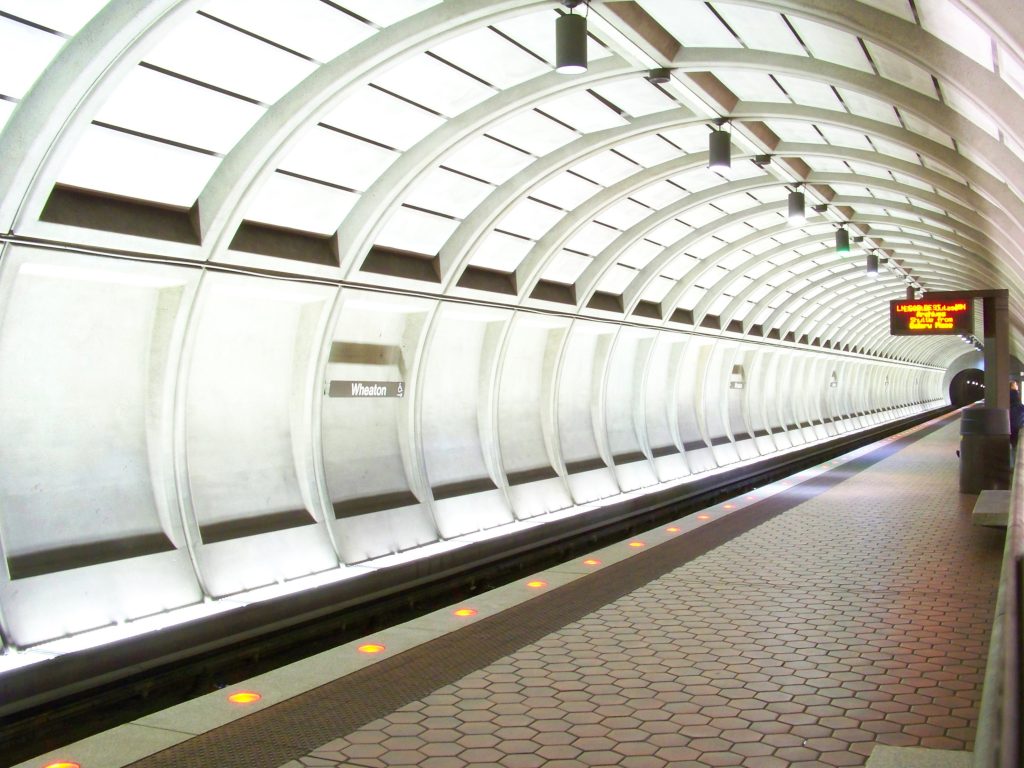
Wheaton is a census-designated place in Montgomery County, Maryland, United States, situated north of Washington, D.C. and northwest of downtown Silver Spring. Wheaton takes its reveal from Frank Wheaton (1833–1903), a career officer in the United States Army and volunteer from Rhode Island in the Union Army who rose to the rank of major-general even though serving before, during and after the Civil War.
Wheaton was found to have a population of 52,150 in the 2020 census. The United States Postal Service has assigned ZIP code 20902 to Wheaton, but the Wheaton Post Office is a part of the larger Silver Spring area. Downtown Wheaton is located around the triangle formed by Veirs Mill Road, University Boulevard, and Georgia Avenue.
Wheaton developed from Leesborough (named in 1826), a little business district which grew close the junction of three major roads: The first of these is Brookeville Pike (also known as the Washington-Brookeville Pike and difficult as the Union Turnpike, now Georgia Avenue) a north/south toll thoroughfare meting out from Washington, D.C., to Brookeville, and eventually to Baltimore.
The second road, Veirs Mill Road (named after a grist and sawmill built upon Rock Creek by Samuel Clark Veirs in 1838), was one allocation of a much longer thoroughfare connecting westwards to Rockville, Maryland and thence towards the Potomac River and as soon as to Virginia via ferry crossings. This was a.k.a. the “City Road” in Rockville, and in explanation to the era of the Civil War it was known plus as the “New Cut Road.”
The last of these roads was known as Old Bladensburg Road (now University Boulevard) which, as it does in gift day, connected Georgetown, Bethesda, Chevy Chase, Kensington, Wheaton, Silver Spring, and Bladensburg.
The issue district when became known as Mitchell’s Crossroads, named after Robert T. Mitchell’s tavern, which was located at northeast corner of Union Turnpike (renamed from Brookeville Pike; now Georgia Avenue) and Old Bladensburg Road (now University Boulevard).
Confederate General Jubal Early’s troops marched through the area of their pretentiousness to occupy Washington, D.C.Union General Frank Wheaton successfully led a hostility to defend Washington, D.C., fighting off an invasion by the Confederate troops at the Battle of Fort Stevens in 1864. The area also saw them retreat through the Place after the unproductive invasion.
Mitchell’s Tavern was thought to exist since approximately 1865, and it stood until 1940 considering it was destroyed by a fire.
Following the subside of the Civil War, the area’s first postmaster was George F. Plyer. In October 1869, Plyer, a dogfight veteran, renamed the post office in rave review of his commanding officer, General Wheaton.
For many years after the Civil War, the Wheaton Place was being unaccompanied lightly used, mostly for farming, or was undeveloped. In 1871, the first African American Church, Allen Chapel AME Church, was established in this small undeveloped area. This religious body maintained its presence in the Wheaton community until 2000, at which era the New Creation Church purchased the property. Into the forward 20th century, civic bump was slow, with a few extra businesses being usual along the major roads. But as the capital region started to rudely grow after World War II, Wheaton speedily expanded. The area’s first modern post office opened in 1947 (earlier records fake that the broadcast office had used the Leesborough name). In addition, the Washington Suburban Sanitary Commission (WSSC) was active, adding new utility infrastructure to the area; as part of that work, and just north of Wheaton, the prominent Glenmont Water Tower was constructed in 1947. And subsequently starting soon thereafter, in 1948, Wheaton was steadily built-out, by several developers (Kay Construction Co., in particular), becoming a share of the modern-day suburbs of Washington, D.C. Today, as an unincorporated town, Wheaton is governed locally by the civic meting out of Montgomery County. For some forward looking information databases, such as official Real Estate records, Wheaton (along in the tune of several neighboring locales) is considered to be a sub-section of larger Silver Spring.
In the 1950s the area was developed bearing in mind Cape Cod, ranch houses, and split level homes purchased by white, largely middle class, families; a amalgamation of blue collar and white collar workers. Now, more of this older housing buildup is owned or rented by a diverse population.
Between 2000 and 2010, Wheaton’s Hispanic population has increased from 29% to 42%. Wheaton’s Hispanic population is highly ethnically diverse – as of the 2010 Census, Wheaton is 18.5% Salvadoran, 3.2% Mexican, 2.8% Guatemalan, 2.3% Peruvian, 2.3% Honduran, 1.3% Dominican, 1.2% Nicaraguan, 1% Bolivian, 0.9% Colombian, 0.8% Puerto Rican, 0.7% Ecuadorians, 0.3% Cuban, 0.3% Chilean, and 0.3% Argentine, all numbering greater than 100 residents. 16.5% of Wheaton’s residents were White Hispanics/Latinos, 1% were Afro-Hispanics/Afro-Latinos, 0.6% were American Indian or Alaska Native Hispanics/Latinos, 0.2% were Asian-American Hispanics/Latinos, 3% were Hispanics/Latinos of two or more races, and 20.5% were Hispanics/Latinos from some further race.
Local gang issues. In 2020 local prosecutors outlined in a 28 page indictment that 21 MS-13 Gang members had functional crimes next to 18 victims. Of the 18 victims, 9 were in Wheaton. The crimes adjoining Wheaton residents includes murder, attempted murder later than a gun, assault and racketeering.